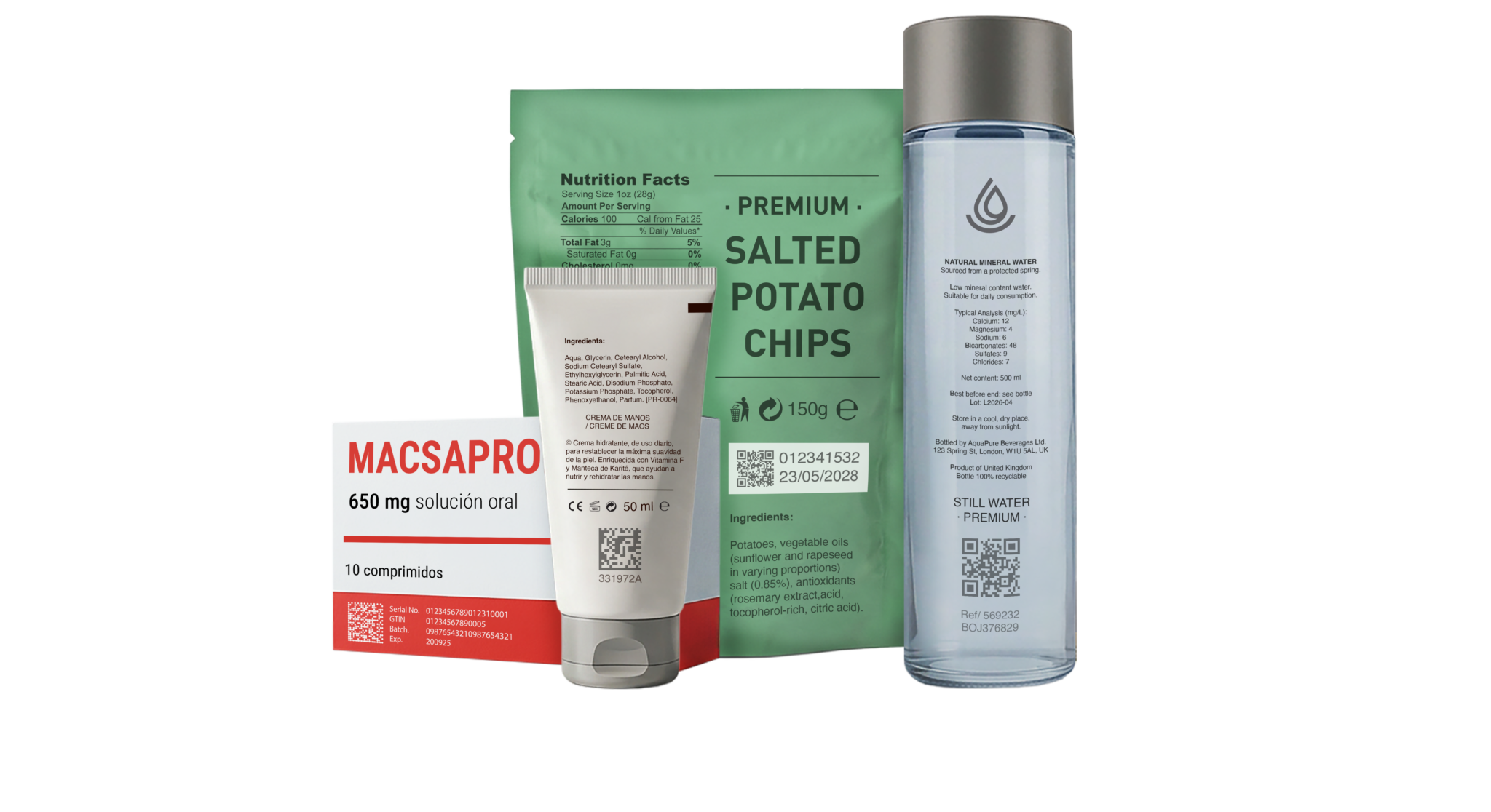
For years, product coding was seen as a simple operational requirement. As long as the expiry date was visible and the barcode scanned correctly, most manufacturers considered the job done.
That is changing rapidly.
Today, unreadable, inconsistent or low-quality codes are becoming a serious compliance, traceability and operational risk for food manufacturers across the UK and Europe. With new regulations, increasing retailer requirements and the transition towards 2D codes, coding quality is no longer just a production issue. It is becoming part of a company’s compliance strategy.
Why unreadable codes are becoming a compliance risk
Food manufacturers are facing increasing pressure from retailers, regulators and consumers to improve traceability, reduce waste and ensure packaging transparency.
At the same time, initiatives such as GS1 Sunrise 2027 are accelerating the adoption of 2D codes capable of storing batch data, expiry dates, serialisation and traceability information.
Unlike traditional barcodes, these new generation codes carry significantly more critical data. If a code is unreadable, damaged or incorrectly printed, the consequences become much more serious:
- Traceability gaps.
- Failed retailer scans.
- Product rejection.
- Recall complications.
- Production rework.
- Compliance exposure.
- Wasted packaging materials.
In regulated food environments, coding errors are no longer cosmetic problems. They directly affect operational reliability and product traceability.
The hidden operational cost of unreadable codes
Many food manufacturers underestimate how much production inefficiency originates from coding instability.
Common problems include:
- Inconsistent print contrast.
- Smudged or damaged codes.
- Poor readability at high line speeds.
- Incorrect expiry date formatting.
- Maintenance-related interruptions.
- Consumable failures.
- Code degradation during logistics or cold-chain transport.
These issues often lead to manual inspections, product rejections, line stoppages and additional waste.
For manufacturers operating high-speed food production lines, even small coding inconsistencies can create expensive downstream problems.
This becomes even more critical in fresh and perishable food sectors, where expiry date accuracy and batch traceability are essential for stock rotation and food safety.
PPWR and the growing pressure on packaging compliance
The Packaging and Packaging Waste Regulation (PPWR) is increasing pressure on manufacturers to reduce packaging waste and improve packaging sustainability across the supply chain. For UK food and beverage companies exporting into the EU, PPWR requirements are becoming increasingly relevant. PPWR guidance for food manufacturers
As a result, many manufacturers are reviewing:
- Packaging materials.
- Recyclable packaging formats.
- Traceability systems.
- Coding technologies.
- Operational waste reduction.
Coding systems that rely heavily on consumables, frequent maintenance or inconsistent print quality are becoming harder to justify in sustainability-focused production environments.
At the same time, retailers are pushing for greater transparency and more reliable product data through GS1-compliant QR codes and 2D barcode systems. Tesco recently announced the rollout of QR codes on selected own-brand food products as part of the industry-wide transition towards next-generation traceability.
Why 2D codes require higher print quality
The transition from traditional 1D barcodes to 2D codes changes the level of precision required on packaging lines.
2D codes can contain:
- GTIN data.
- Batch information.
- Expiry dates.
- Serial numbers.
- Digital links.
- Traceability records.
That means print quality, contrast and code integrity become critical.
A poorly printed 2D code is not simply difficult to scan. It can compromise traceability, affect recalls and create compliance risks across the supply chain.
For manufacturers running high-speed production lines, maintaining stable code quality across flexible packaging, labels, cardboard, PET or film materials is becoming a key operational challenge.
The shift towards permanent, low-maintenance coding
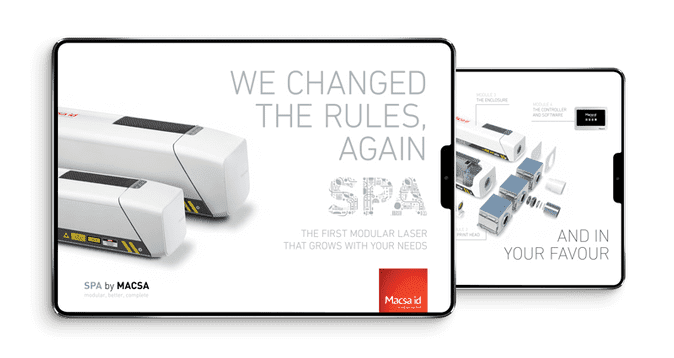
As manufacturers review their packaging and coding processes, many are moving towards permanent laser coding solutions to reduce operational complexity and improve coding consistency.
Compared to consumable-based systems, laser technology offers several advantages:
- Permanent high-contrast codes.
- Reduced maintenance.
- No ink or ribbon waste.
- Improved code consistency.
- Stable marking at high speeds.
- Better performance on recyclable packaging materials.
This is particularly relevant for bakery, snacks, confectionery, beverage and fresh food manufacturers working with flexible packaging and fast-moving production environments.
The objective is no longer just printing a code.
It is ensuring that every code remains readable, compliant and traceable throughout the product lifecycle.
Improving coding reliability in food packaging
The food industry is entering a new phase where packaging, traceability and compliance are becoming increasingly connected.
Unreadable codes are no longer a minor production issue. They are becoming a direct business risk that affects compliance, efficiency, sustainability and retailer relationships.
Manufacturers that prepare early for PPWR, GS1 Sunrise 2027 and next-generation traceability requirements will be in a stronger position to reduce operational waste, improve supply chain visibility and avoid costly compliance issues in the future.