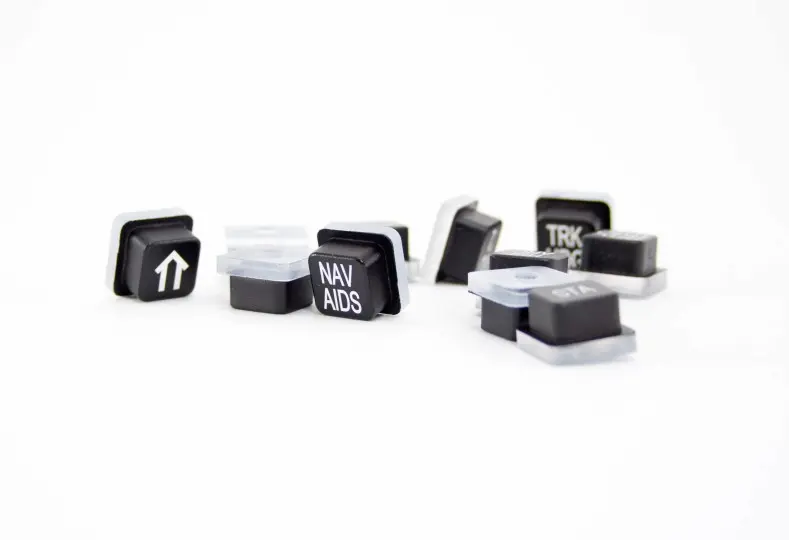
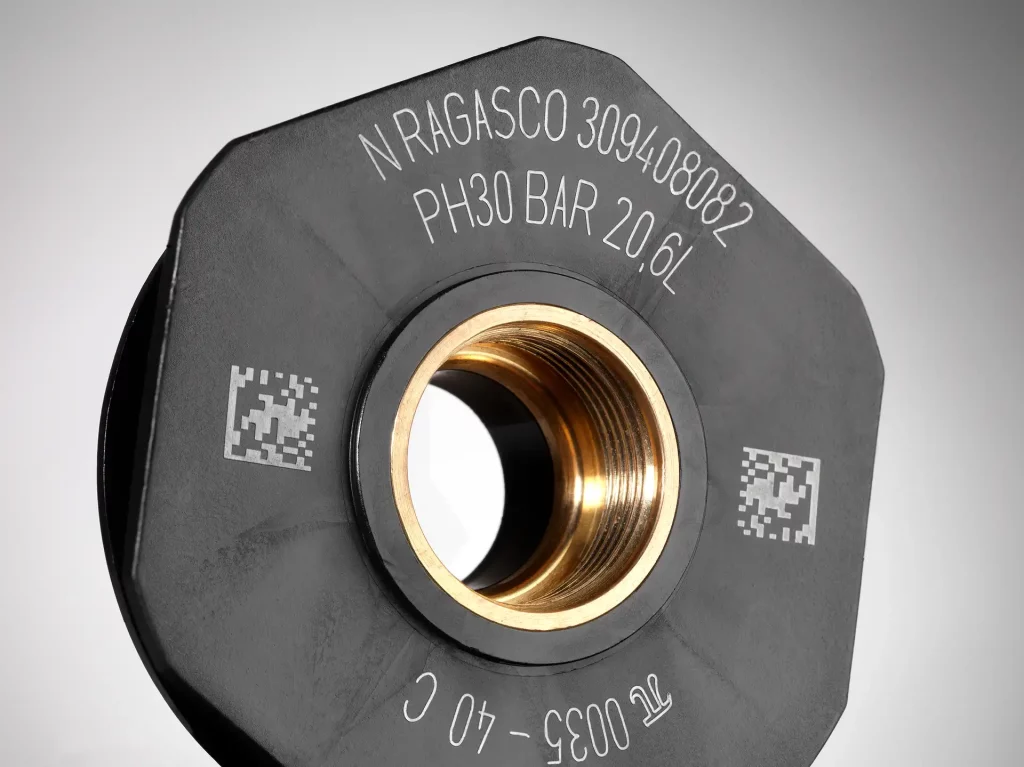
Defence and aerospace manufacturers need permanent, reliable identification on components, assemblies and technical equipment. Laser marking helps apply serial numbers, part numbers, 2D Data Matrix codes, instructions and other traceability information directly to the component.
These sectors often operate under strict quality and documentation requirements. Codes must remain legible throughout manufacturing, assembly, maintenance and service. They may also need to withstand handling, vibration, chemicals, temperature changes and demanding operating environments.
Macsa id provides laser marking solutions for defence and aerospace components. Our systems support high-precision, contact-free marking on metals, coated materials, engineered plastics, cables and other technical substrates.
Permanent marking for aerospace and defence traceability
Aerospace and defence supply chains require accurate component identification. Manufacturers use permanent marks to link each part to technical data, production records and maintenance information.
Laser marking can apply:
- Serial and part numbers.
- Batch and lot codes.
- 2D Data Matrix codes.
- Barcodes and QR codes.
- Manufacturer identification.
- Technical symbols and instructions.
- Quality-control and traceability data.
A clear, durable code helps teams identify components quickly. It also supports quality processes and improves control throughout the component lifecycle.
Data Matrix codes for aerospace and defence components
2D Data Matrix codes allow manufacturers to store detailed information in a compact marking area. They are particularly useful for components with limited available space.
Some aerospace and defence programmes specify marking requirements such as SAE AS9132B or MIL-STD-130. SAE AS9132B defines quality requirements for Data Matrix marking in aviation, space and defence applications. MIL-STD-130 addresses the identification marking of US military property.
However, the applicable marking standard depends on the customer, programme and contractual requirements. Manufacturers must therefore define the required code content, quality level and verification process before selecting a marking solution.
Laser marking on metals, plastics and cables
Aerospace and defence components use many different materials. These include aluminium, stainless steel, titanium, coated metals, engineered plastics and cables.
Each material requires the right laser source and marking parameters. Fiber laser technology can provide high-quality results on many metal and plastic applications. Other laser technologies may suit specific substrates or contrast requirements.
Macsa id tests each component before recommending a solution. This process considers the material, surface finish, available marking area, code size and required durability.
A clean and consumable-free marking process
Laser marking applies information directly to the component surface. It does not use inks, solvents or ribbons. This helps manufacturers reduce consumables and maintain a clean marking process.
In addition, laser systems can integrate with automated production lines and data-management software. This allows manufacturers to manage variable information efficiently and apply the correct code to each component.
Reliable identification for demanding applications
Defence and aerospace laser marking requires more than a readable code. The marking process must meet the technical, quality and traceability requirements of the application.
Macsa id laser marking solutions help manufacturers create permanent, high-precision identification on critical components. From Data Matrix codes to serial numbers and technical information, our systems support reliable traceability across aerospace and defence manufacturing.