The UK is preparing for one of the most significant changes in beverage packaging: the implementation of the Deposit Return Scheme (DRS), expected to go live in October 2027.
While the system is often associated with recycling and sustainability, its real impact will be felt much earlier—on production lines, packaging design, and product identification systems.
For beverage manufacturers, the key question is no longer if DRS will affect operations, but how prepared they are to meet its requirements.
What is the Deposit Return Scheme (DRS)?
The Deposit Return Scheme is a regulatory initiative designed to improve recycling rates by introducing a deposit on beverage containers.
Consumers pay a small deposit when purchasing a drink and receive it back when returning the empty container.
However, behind this simple concept lies a complex operational system that depends on one critical factor: accurate product identification.
Why DRS is not just a recycling system
DRS is not only about collecting packaging.
It is about ensuring that every container can be:
- Identified.
- Scanned.
- Validated.
- Tracked.
This means that each product must carry a code that works flawlessly across the entire lifecycle—from production to return.
If a code fails, the system fails.
The real challenge: production readiness
Many manufacturers underestimate the operational impact of DRS.
The challenge is not adding a code to packaging.
The challenge is ensuring that this code can be reliably produced, read and managed at high speed.
Production lines will need to handle:
- High-quality, scannable codes on every unit.
- Integration with databases and digital systems.
- Real-time validation and data accuracy.
- Consistent performance without increasing downtime.
Without this level of readiness, compliance becomes difficult—and costly.
Coding and traceability: the foundation of DRS
For DRS to work, coding is not optional. It is the foundation.
Technologies such as laser coding enable:
- Permanent, high-contrast marking
- Reliable readability across the supply chain
- Reduced maintenance and consumables
- Integration with traceability and data systems
This is especially relevant as manufacturers move towards 2D codes and connected packaging, aligned with broader industry trends such as GS1 standards and digital traceability.
What should manufacturers do before 2027?
With DRS approaching, beverage companies should start preparing now.
Key steps include:
- Evaluating current coding systems and readability performance
- Assessing integration between production lines and data systems
- Testing different marking technologies (laser vs ink-based)
- Preparing for future requirements such as 2D codes and digital product data
Early preparation reduces risk and ensures a smoother transition.
How Macsa supports DRS readiness
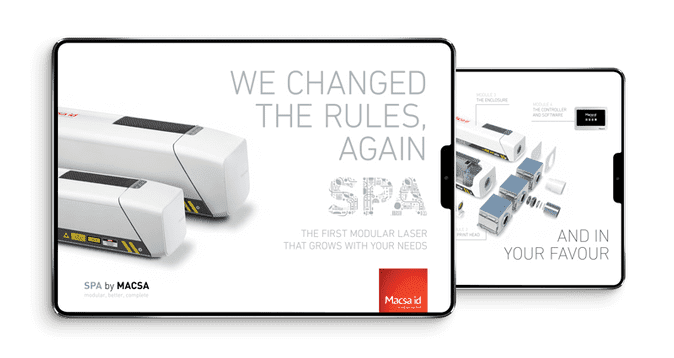
At Macsa, we help manufacturers adapt their production lines to new regulatory and operational challenges.
Our solutions focus on:
- High-performance coding systems for beverage packaging
- Integration with traceability and production environments
- Reliable, maintenance-free laser technology
- Support for future-ready coding strategies (2D, connected packaging)
Because preparing for DRS is not just about compliance.
It’s about building a more efficient, connected and future-proof production system.