Why label-free PET bottles are gaining attention
Label-free PET bottles are becoming an important topic across the packaging industry as manufacturers look for ways to improve recyclability and prepare for future packaging regulations such as the Packaging and Packaging Waste Regulation (PPWR).
By removing labels, sleeves and adhesives, companies can simplify packaging structures and improve the recycling process for PET packaging. Fewer packaging components can help reduce contamination during sorting and support the production of higher-quality recycled PET (rPET).
For beverage, food, cosmetics and FMCG manufacturers, label-free packaging is increasingly being explored as part of broader sustainable packaging strategies.
However, removing the label also creates a new operational challenge.
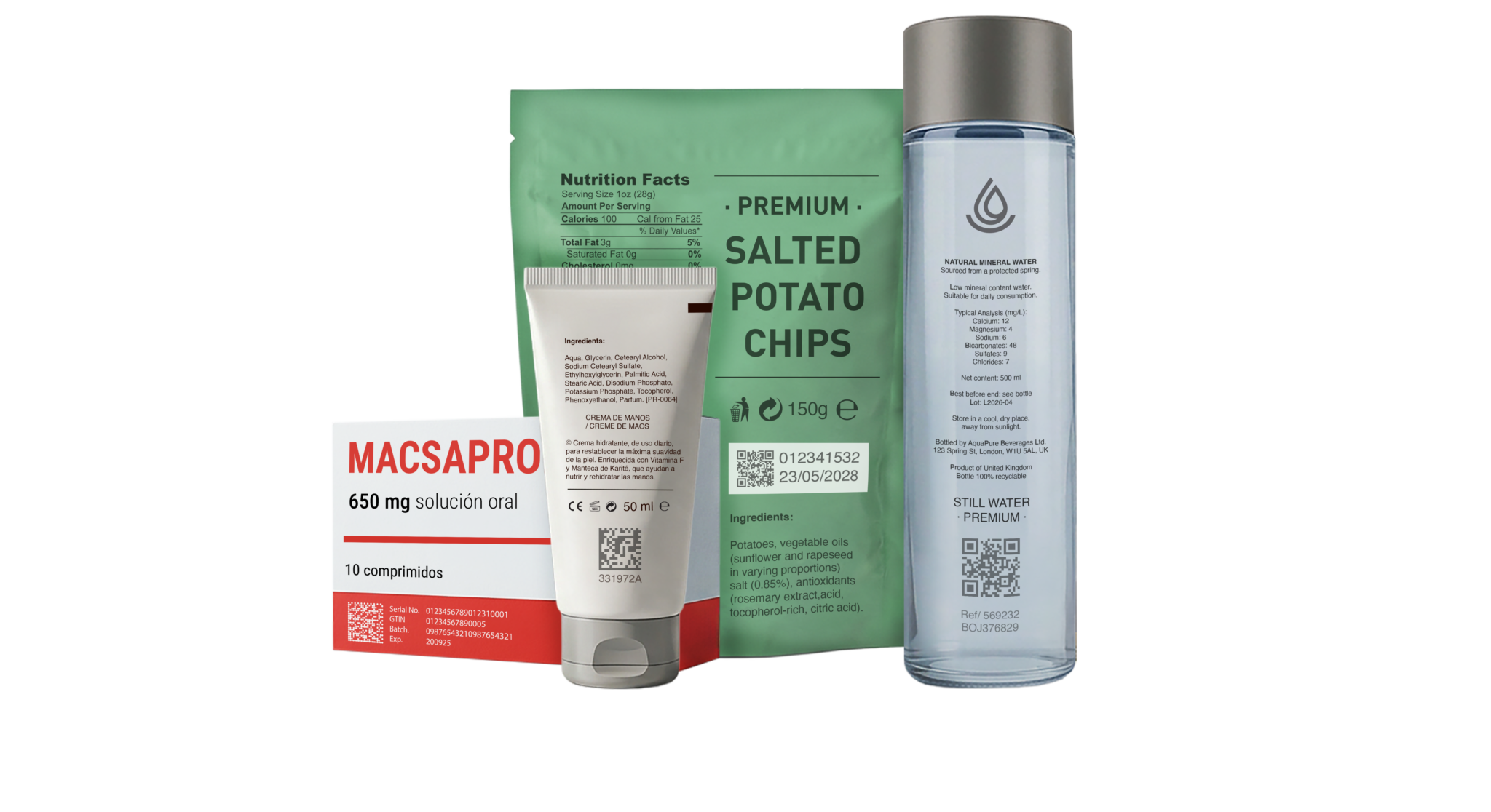
Manufacturers still need to apply batch codes, expiry dates, traceability data and product identification directly onto the packaging itself — without affecting recyclability, packaging appearance or production efficiency.
Why packaging recyclability is becoming a production priority
Packaging is no longer designed only for branding and logistics.
Today, manufacturers are also under pressure to improve:
- Packaging recyclability.
- Material recovery quality.
- Packaging compliance.
- Waste reduction.
- Operational efficiency.
- Sustainability performance.
The upcoming PPWR regulation is accelerating this shift across Europe, particularly for plastic packaging and PET bottles used in high-volume production environments.
Traditional labels can sometimes interfere with PET recycling streams, especially when adhesives, multilayer materials or additional packaging components are involved.
As a result, many manufacturers are reviewing how packaging information can be applied directly onto bottles while maintaining compatibility with recycling systems.
How to code label-free PET bottles without affecting recyclability
Removing the label does not remove the need for information.
Manufacturers still need to apply:
- Expiry dates.
- Batch codes.
- Traceability information.
- Production data.
- QR codes.
- 2D codes.
- GS1 Digital Link identifiers.
The challenge is ensuring this information remains permanent and readable throughout the supply chain while supporting recyclable packaging design.
For high-speed beverage and FMCG production lines, coding technology must also maintain:
- High code quality.
- Production efficiency.
- Line speed performance.
- Minimal maintenance.
- Long-term readability.
This is why direct-to-package coding solutions are becoming increasingly important for PET bottle packaging.
Why laser marking is becoming more relevant for PET bottle coding
As manufacturers move towards recyclable packaging models, many are also reviewing the environmental impact of their coding technologies.
Traditional labelling systems and consumable-based coding technologies can generate additional waste, increase maintenance requirements and add operational complexity to the production line.
Laser marking offers an alternative approach by applying permanent codes directly onto PET packaging without inks, ribbons or additional consumables.
For manufacturers exploring label-free PET packaging, this can support:
- Reduced packaging complexity.
- Lower consumable dependency.
- Permanent code readability.
- Improved packaging traceability.
- More sustainable production processes.
- Compatibility with recyclable packaging strategies.
For beverage manufacturers in particular, maintaining readable codes at high production speeds remains essential as packaging formats evolve towards recyclable-by-design models.
The future of sustainable PET packaging
Label-free PET bottles reflect a broader transformation happening across the packaging industry.
Manufacturers are increasingly moving towards packaging systems designed around recyclability, circular economy objectives and operational efficiency.
As PPWR requirements continue to evolve, packaging design decisions will increasingly affect both sustainability performance and production processes.
The challenge is no longer simply removing packaging elements.
The real challenge is applying essential product information in a way that remains fully compatible with recycling systems while maintaining traceability and production performance.
For manufacturers adopting label-free PET packaging, coding and marking technologies will become an increasingly important part of sustainable packaging strategies.
FAQ’s
Yes. Direct-to-package coding technologies allow manufacturers to apply traceability information, batch codes and expiry dates directly onto PET bottles without using additional labels.
Laser marking can support recyclable packaging strategies because it removes the need for additional consumables such as labels, inks or ribbons. This can help simplify packaging structures and improve recycling compatibility.
Many manufacturers are exploring label-free PET packaging to improve recyclability, reduce packaging complexity and align with sustainability initiatives such as PPWR.
PPWR encourages packaging designs that improve recyclability and reduce unnecessary packaging components. This is accelerating interest in recyclable PET packaging and alternative coding solutions.