Ever wondered why one laser can mark a cardboard box perfectly, yet damage a medical device? Laser marking isn’t one-size-fits-all — and that’s actually a good thing.
While CO₂ and Fiber lasers still dominate many production lines, UV lasers are increasingly chosen where precision, contrast, and material integrity are critical. Understanding the differences ensures you select the best technology for your material, process, and industry.
CO₂ Lasers: The Packaging Workhorse
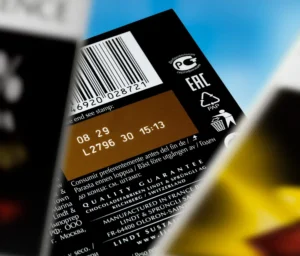
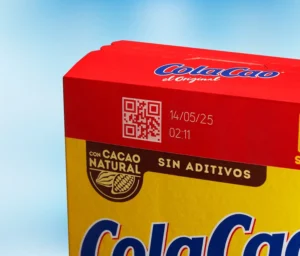
Fast, cost-effective, and dependable — the CO₂ laser is the reliable workhorse of packaging lines. Operating at a long wavelength (10.6 μm), it’s ideal for organic materials such as cardboard, paper, wood, glass, and many plastics.
Ideal applications:
- Secondary packaging
- High-speed coding on cartons and labels
- Inline production environments where efficiency is key
Watch out for:
CO₂ lasers rely on heat to create marks. On robust materials that’s fine, but on delicate films or softer plastics, this can cause discoloration, deformation, or burn marks. If visual quality matters, you may need a cooler approach.
Fiber Lasers: Power and Permanence
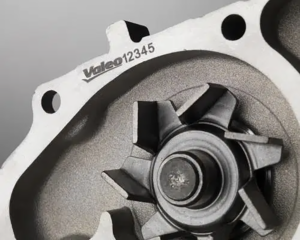
When you need strength and staying power, fiber lasers deliver. Operating at a much shorter wavelength (around 1.06 μm), they excel at marking metals and hard plastics — producing deep, permanent marks that withstand abrasion, chemicals, and extreme temperatures.
Ideal applications:
- Metals and coated metals
- Automotive and industrial components
- Deep engraving
- High-contrast annealing
Watch out for:
Fiber lasers are powerful — sometimes too powerful. On thin films or delicate plastics, they can cause melting or surface damage. If precision and material integrity are key, another technology may serve you better.

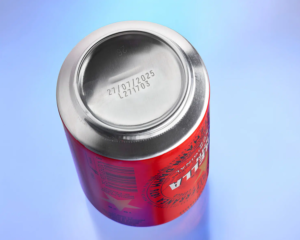

UV Lasers: Precision Without Heat
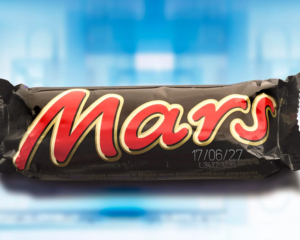
UV lasers are the rising stars of precision marking. Operating at an ultra-short wavelength (355 nm), they achieve what’s known as “cold marking.” Instead of burning the surface, the laser breaks molecular bonds — producing crisp, high-contrast marks with minimal thermal stress.
Ideal applications:
- Sensitive plastics and films
- Medical devices and electronics
- Pharmaceutical and cosmetic packaging
Key advantages:
- Exceptional marking quality
- No burns or deformation
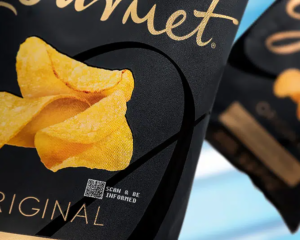
- Perfect for micro-marking, 2D codes and small characters
- Maintains full material integrity
Trade-off:
UV lasers involve a higher initial investment. But many manufacturers find the cost balances out quickly through reduced rejects, improved product aesthetics, and easier regulatory compliance.

Choosing the Right Laser
A simple way to decide:
CO₂ → Speed and simplicity for packaging
Fiber → Durability and depth for metals and hard plastics
UV → Precision and aesthetics for sensitive materials
At Macsa id UK, we help manufacturers match the right laser technology to their production needs — ensuring reliable marking, consistent quality, and long-term performance.
Not sure which laser fits your production line? Our experts can assess your material and process to recommend the solution that delivers the best results for your operation.