For years, a simple 1D barcode has quietly done its job at the checkout and in the warehouse. Sunrise 2027 changes that. GS1’s global initiative will see 2D barcodes – such as DataMatrix and QR codes using GS1 standards – become the new normal, carrying far more information than a basic product number. For manufacturers, it’s not just a barcode refresh; it’s a fundamental shift in how products are identified, traced and protected.
What GS1 Compliance Really Means
Being GS1 compliant goes beyond “having a barcode.” It means:
- Using globally unique identifiers (GTINs) issued through GS1.
- Encoding data in a standardised format so every partner reads it the same way.
- Including extra data where needed – batch/lot, expiry dates, serial numbers – especially for food, pharma, cosmetics and other regulated or high‑risk sectors.
GS1 compliance is what allows a product packed in one country to be scanned, understood and traced in another without anyone having to guess what the code means.
What Sunrise 2027 Actually Changes
Sunrise 2027 is GS1’s push for 2D barcodes at point‑of‑sale and point‑of‑care by the end of 2027. In practice, that means:
- Moving from 1D “price lookup only” barcodes to 2D codes that can hold rich data.
- Ensuring packaging can carry GS1‑compliant 2D symbols (e.g. GS1 DataMatrix, GS1‑powered QR).
- Making sure the data structure in those codes follows GS1 rules, so scanners and systems can reliably pull out GTIN, batch, expiry, serials and more.
Linear EAN/UPC codes won’t vanish overnight, but the expectation is clear: new and updated packaging should start adopting 2D now rather than in a last‑minute rush.
What If You Don’t Get Ready?
Ignoring GS1 and Sunrise 2027 doesn’t just risk an awkward conversation with a retailer. Potential consequences include:
- Products rejected or delisted because codes are incomplete, non‑standard or not scannable.
- Broken traceability, making targeted recalls difficult and expensive.
- Missed opportunities around anti‑counterfeiting and product authentication that competitors will use to their advantage.
- Extra rework later, when packaging, artwork and systems all need urgent updates at once.
In short, non‑compliance can hit margins, reputation and relationships.
How Macsa id UK Can Help
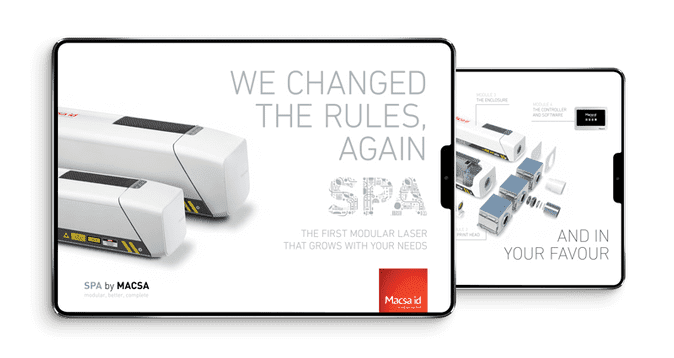
The good news: if you already use or are considering laser coding, you are halfway there. Macsa id UK’s laser systems are designed to mark high‑quality 1D and 2D barcodes – including GS1 DataMatrix and GS1‑formatted QR codes – directly onto packaging and products. That means:
- Permanent, high‑contrast codes on cardboard, labels, plastics, metals, glass and more.
- The ability to include GTIN, batch/lot, expiry and serial numbers in a single mark.
- No inks or labels to smudge, fall off or run out when you most need them.
We work with manufacturers to align their coding with GS1 rules, ensure their 2D symbols remain readable at line speed, and make sure their marking hardware won’t be the weak link in GS1 readiness.
Start early, get your GS1 foundations right, and your barcodes will be ready for 2027 long before 2027 is ready for you.