The EU Packaging and Packaging Waste Regulation (PPWR) starts applying on 12 August 2026. For UK manufacturers that place packaged products on the EU market, this makes packaging compliance an operational issue as well as a regulatory one.
PPWR for UK exporters is not only a question for packaging development or sustainability teams. It can affect materials, component choices, artwork, coding processes, variable data, line integration and quality controls.
The Regulation covers packaging placed on the EU market regardless of its material or origin. That means UK exporters should assess the packaging they use for EU-bound products and understand how future PPWR requirements may affect their production lines. The European Commission’s PPWR guidance confirms the Regulation’s general application date and scope.
Start with the complete packaging unit
A common mistake is to assess one packaging component in isolation. However, PPWR reviews the packaging unit as a whole.
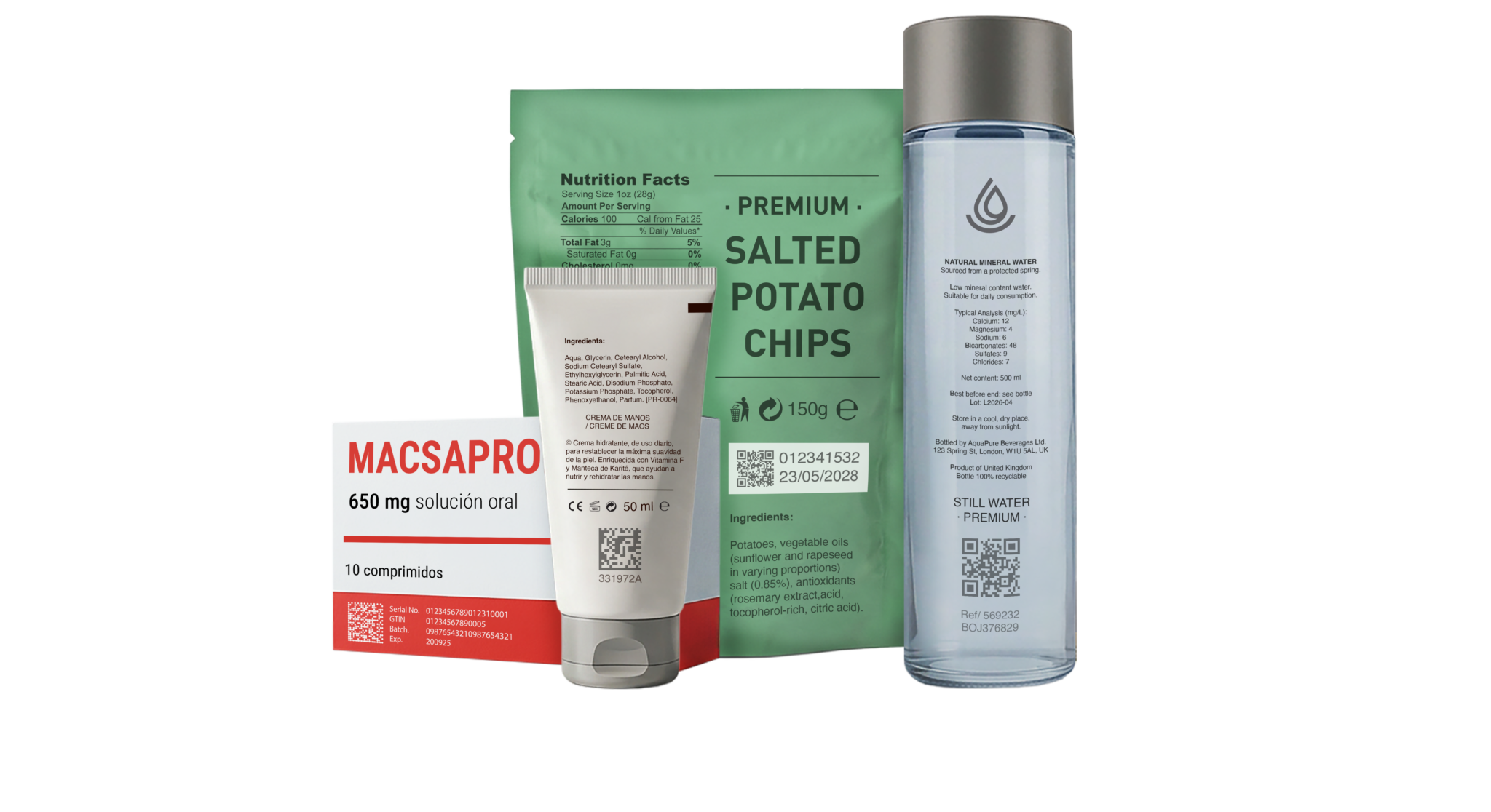
For a bottle, this may include the bottle itself, closure, label, sleeve, adhesive, inks and any barrier layers. For flexible packaging, it can include the film structure, printed layers, coatings, seals and coding method.
This matters because a change that improves one component does not automatically improve the recyclability of the finished pack. A lighter bottle, for example, may still present challenges if the label, sleeve, adhesive or printed elements affect sorting or recycling compatibility.
UK exporters should therefore create a clear packaging-component map for each EU-bound format. This should identify:
- The materials and layers in the finished pack.
- The role of labels, sleeves, adhesives and inks.
- The coding method used on the line.
- The data applied to the pack.
- Any differences between UK and EU product versions.
This map gives packaging, quality and operations teams a shared starting point for decision-making.
Review the impact of material changes on coding
Many manufacturers are reviewing packaging structures as they prepare for PPWR. This can involve lighter formats, mono-material films, new recyclable plastics or changes to labels and sleeves.
However, a packaging material that supports a recyclability objective may behave differently on the production line. Surface finish, colour, coating, film composition and pack geometry can all affect code contrast, permanence and readability.
This is where coding teams need to join the project early. A code that works on the current pack may not deliver the same result on a new material. The issue may only become visible at full production speed, after several changeovers or when the code passes through distribution conditions.
Before approving a new pack, manufacturers should test:
- Code quality and contrast on the final material.
- Performance at actual line speed.
- Variable-data accuracy during changeovers.
- Code position and available marking area.
- Readability with the relevant scanners or vision systems.
- The effect of surface finishes, coatings and pack curvature.
Packaging projects often fail when they treat coding as a final production-line adjustment. In reality, it should form part of material validation and packaging approval.
Assess direct marking without oversimplifying the decision
Direct marking can help remove a packaging component in some applications. For example, laser coding may reduce the need for labels, inks or ribbons on suitable materials.
However, direct marking is not a universal PPWR solution. Manufacturers still need to assess the complete packaging unit and validate the result for the specific application.
The decision should consider more than consumables. Teams should also assess code quality, material compatibility, production speed, cleaning requirements, maintenance, data integration and the final recycling pathway.
This approach avoids replacing one packaging issue with another operational issue.
Keep traceability and packaging data connected
PPWR will increase the importance of accurate packaging information. At the same time, manufacturers already need to manage batch codes, dates, product references, barcodes and other variable data on the line.
When a packaging format changes, the coding process may also need to change. The code location may move. The available marking area may reduce. The material may require different parameters. In addition, separate EU and UK product versions may need different data or artwork.
Manufacturers should therefore review how packaging data moves from product specification to the production line. This includes:
- Who owns the approved coding content.
- How operators select the correct product and packaging format.
- How the line receives variable data.
- How teams control coding changes.
- How they verify the final code.
- How they record approval and validation results.
A connected process helps reduce manual intervention and makes it easier to manage packaging changes across sites and markets.
Build acceptance criteria before the line trial
A successful PPWR readiness project needs clear acceptance criteria. Teams should agree what the finished pack must achieve before the line trial begins.
This should include packaging performance, code quality, production speed and traceability requirements. It should also identify who approves each element: packaging, quality, operations, regulatory, sustainability and IT or OT teams.
The goal is not simply to produce a code that looks acceptable. The goal is to confirm that the new packaging format can run reliably, carry the right data and support the required quality standard.
A practical checklist for UK exporters
UK exporters should review the following points for each EU-bound packaging format:
- Identify every component in the packaging unit.
- Confirm the target EU market and applicable product requirements.
- Map planned material, label or artwork changes.
- Review how those changes affect the coding process.
- Test code quality on the final packaging material.
- Validate marking at real production speed.
- Confirm variable-data management and changeover controls.
- Define code-verification and acceptance criteria.
- Record the results for future packaging and quality reviews.
PPWR readiness starts on the line
PPWR does not turn coding equipment into a compliance tool on its own. However, it does make production-line decisions more relevant to packaging readiness.
For UK exporters, the strongest approach brings together packaging design, material selection, coding technology, data management and validation. By assessing these areas together, manufacturers can prepare EU-bound packaging changes without creating avoidable traceability or production issues.
Macsa id helps manufacturers assess coding and marking applications on new packaging materials, including recyclable and mono-material formats. The objective is simple: ensure that required data remains accurate, legible and reliable at line speed.
Frequently asked questions
Does PPWR apply to UK manufacturers?
PPWR applies to packaging placed on the EU market. UK manufacturers should assess the requirements when they export packaged products to EU countries.
When does PPWR start applying?
The Regulation starts applying generally from 12 August 2026. Some requirements and secondary legislation will follow different implementation timelines.
Does PPWR assess the bottle or the complete pack?
The assessment concerns the complete packaging unit. This can include the bottle, closure, label, sleeve, adhesive, inks and other packaging components.
Can direct laser marking support PPWR readiness?
Direct laser marking can remove a packaging component in suitable applications. However, manufacturers must still assess and validate the full packaging unit.
Why should coding teams be involved in PPWR projects?
New materials, coatings and pack formats can affect code quality and readability. Coding should therefore form part of packaging validation and line trials.
What should manufacturers test before launching a new EU-bound pack?
They should test packaging performance, code quality, line speed, variable-data management and code verification on the final material and format.