We’re refreshing our website so you might notice some changes as they go live, but everything you need is still here.


In the world of jewellery, packaging serves as more than just a functional enclosure; it is an essential aspect of the customer's journey, conveying the inherent value of the jewellery and contributing to their overall experience. The careful presentation of a jewel through packaging not only highlights its beauty, but also reflects the brand and its commitment to quality.
Laser technology emerges as an innovative solution capable of fulfilling both aesthetic and functional demands in packaging design. From an aesthetic perspective, lasers allow for precise and intricate engraving on various materials, imparting a unique and sophisticated touch to the packaging of items like jewellery or premium perfumes.
At the same time, laser technology proves to be an effective solution to guarantee the authenticity and traceability of products through the application of unique codes.
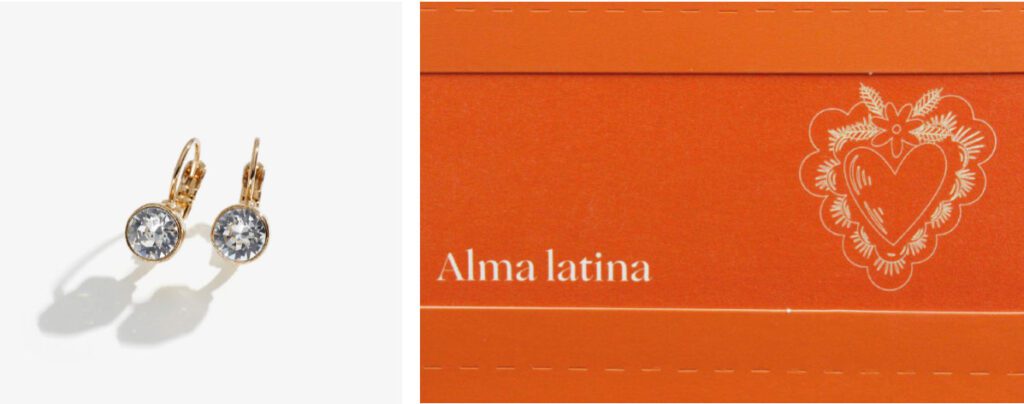
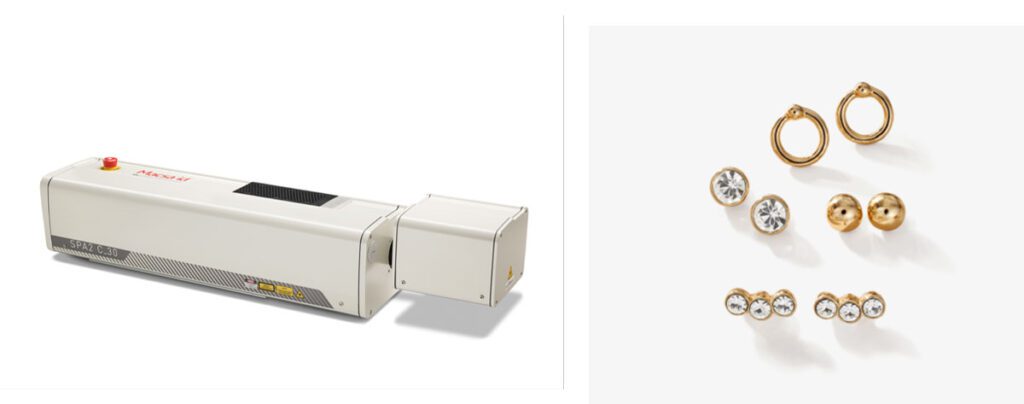
In today's Application News a cardboard jewellery box coated with paint has been marked with a CO2 laser. These lasers emit a beam of infrared light that is absorbed by the cardboard. When the laser energy hits the surface of the material, it causes localised heating. The ablation process removes the paint, leaving the cardboard's colour on the surface and creating a distinctive, contrasting mark.
This results in a permanent mark on the carton featuring specific details, making this technology ideal for simple applications such as coding, or more complex markings such as logos, images or decorative elements commonly found in perfumery or jewellery packaging, where precision and aesthetic quality are paramount. In addition, the speed and versatility of CO2 laser technology makes it an efficient choice for carton marking in industrial and production environments.
Do you want more information about laser marking on cardboard jewellery boxes?
Leave us your details and we will contact you shortly to find the best solution.

What are the key benefits of laser marking on freezer bags?
Recycled materials require the search for marking and coding technologies that are both sustainable and profitable for companies. This type of recycled materials is on the rise in the food market due to environmental concerns and evolving government regulations.
Traceability is crucial in the frozen food industry to guarantee product quality and enable swift detection or recall in emergencies.
Production lines in this sector operate under low temperatures, making laser marking an ideal choice. Laser marking provides cold-resistant, permanent, and highly legible markings, ensuring visibility throughout the product's shelf life.
For this reason, more and more manufacturers are opting for this more sustainable and safer technology compared to traditional ink marking methods.
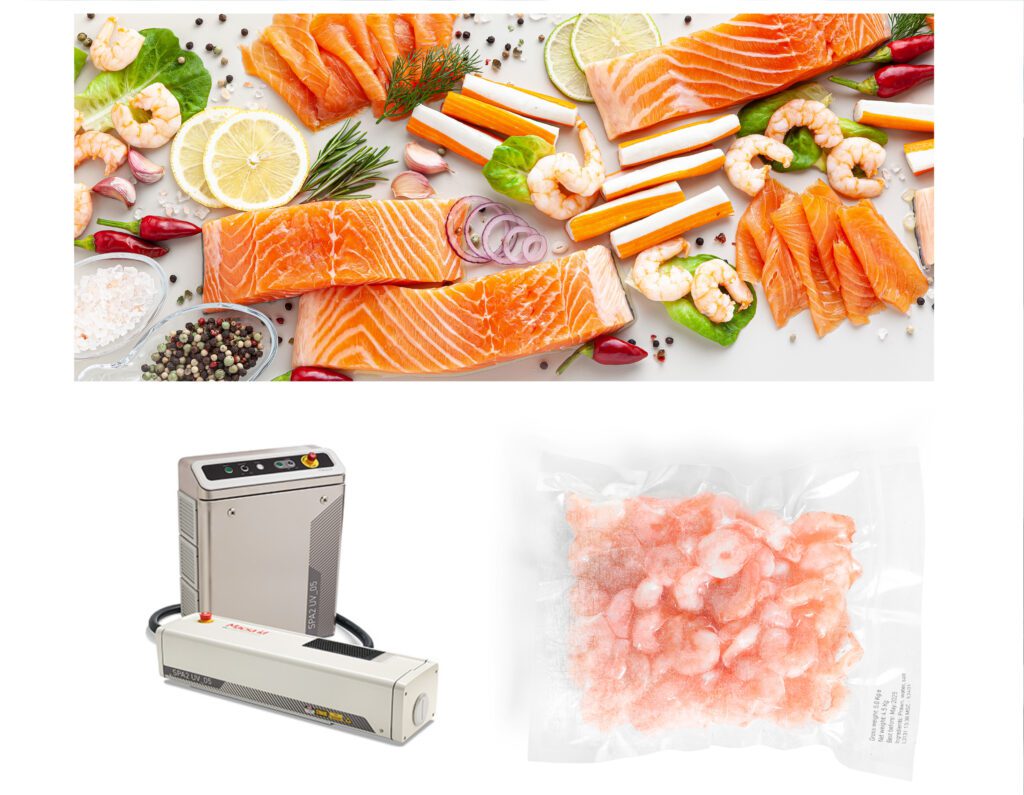
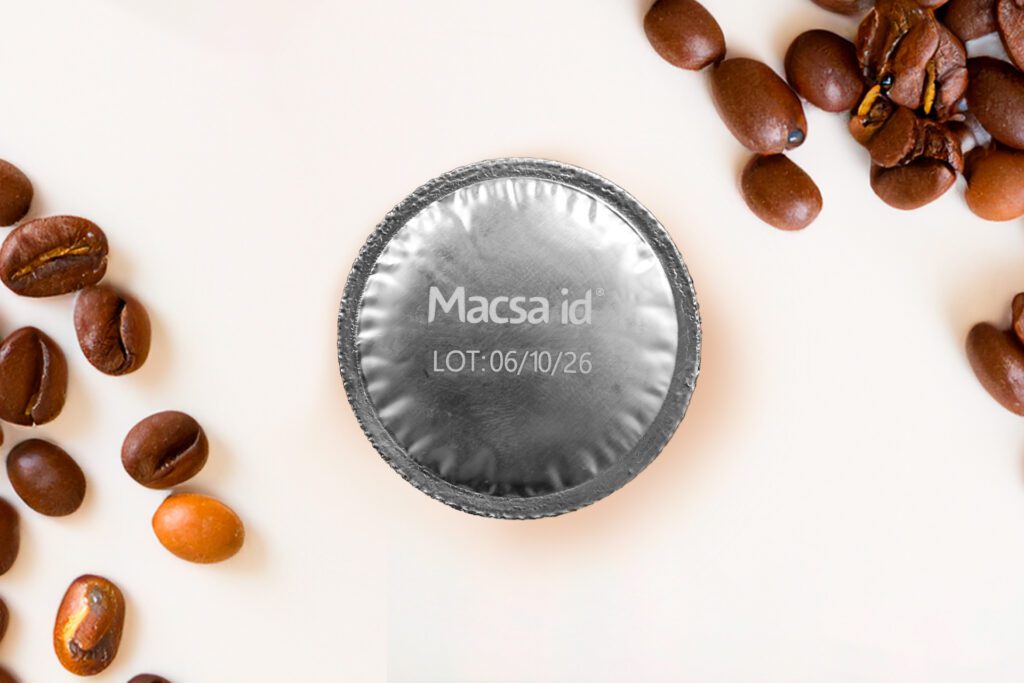
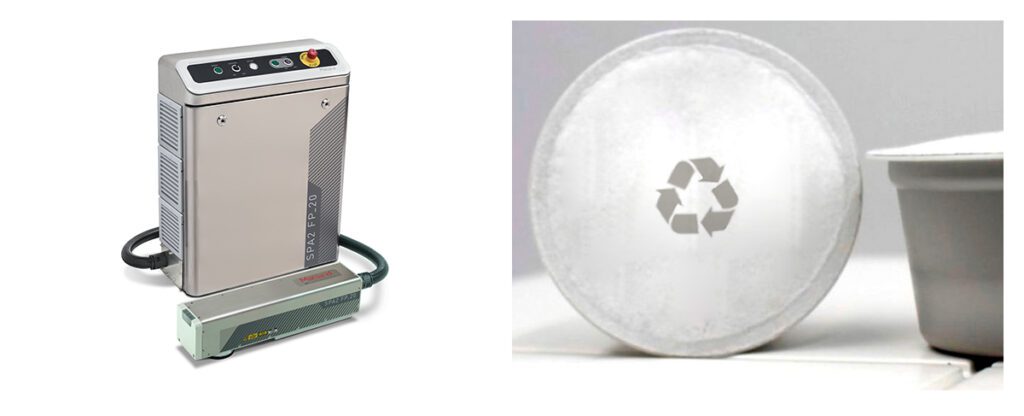
The use of Macsa's SPA2 UV laser allows permanent marking without burning or deteriorating the substrate, ensuring high definition and quality. Laser coding on polyethylene and polypropylene ensures traceability throughout the product's life without generating waste.
The colour of the substrate and the size of the elements to be marked define the power to be used and the speed to be reached. In this case, with laser marking we have achieved good contrast.


Do you want more information about Laser marking on food products? Leave us your details and we will contact you shortly to find the best solution.
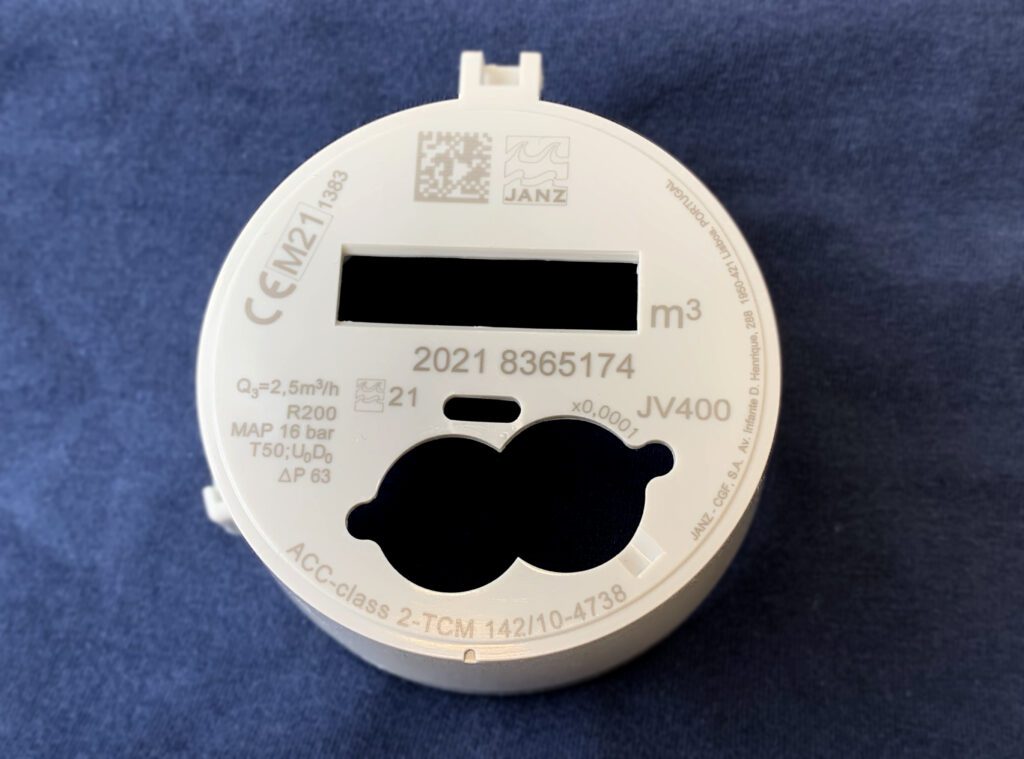
Renowned for its outstanding impact resistance, polycarbonate stands out as a material capable of withstanding impact without easily breaking or chipping. This makes it an excellent choice for applications in optics, automotive, and even glassware.
Marking on lenses is important for providing essential information about the product's features and performance, as well as for complying with industry regulations and standards.
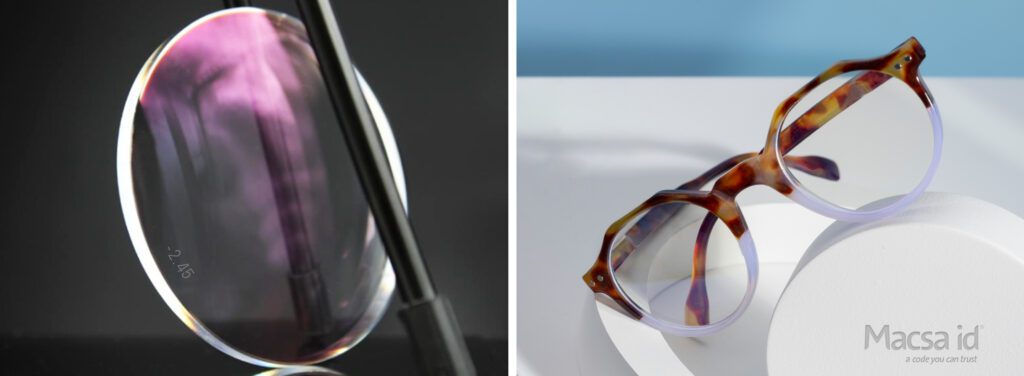
In this case we used a Macsa CO2 laser to mark on eyeglass lenses. Notably, the peculiarity of this marking is its invisibility to the naked eye, only becoming legible when light is applied from behind. This type of application is especially useful in scenarios where internal coding is necessary for product traceability, without the consumer being aware of the marking.
Being a non-contact process, laser marking on polycarbonate lenses ensures the material's integrity, avoiding deterioration and the generation of dust particles that would require cleaning afterwards. The reaction of the CO2 laser with polycarbonate produces high-quality, high-definition, precise markings, allowing for customisation as well as the flexibility to change the marking data.
Laser: SPA2
Market: Medical devices
Material: Polycarbonate
Product: Spectacle lens
Application Type: Marking

Do you want more information about Laser Marking on polycarbonate or other construction materials?
Leave us your details, and we'll get in touch with you shortly to find the best solution.

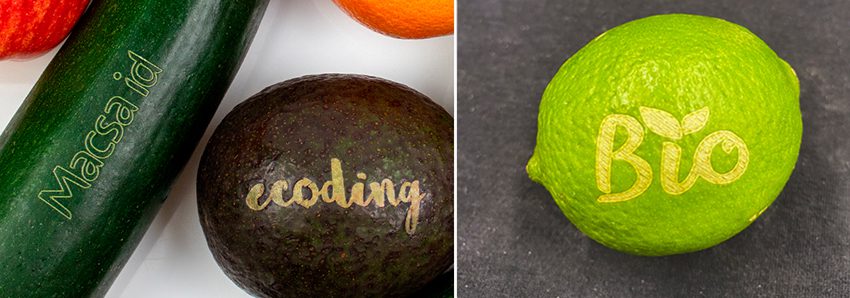 Additionally, laser technology enables us to mark very thin organic material, such as pear, apple, and cucumber skin, with high-definition markings. You can mark the data that best suits your needs, such as the expiry date, batch number, text, logos, or images. This not only enhances traceability but also creates a more sustainable brand image, which is environmentally friendly and respects people's health.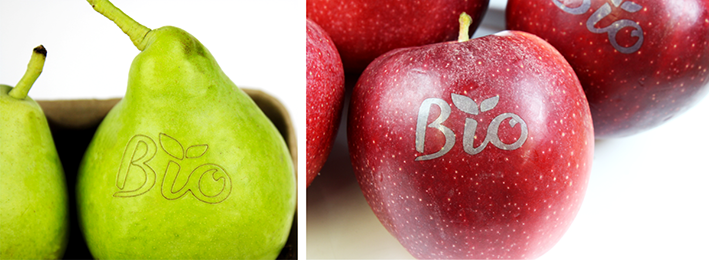
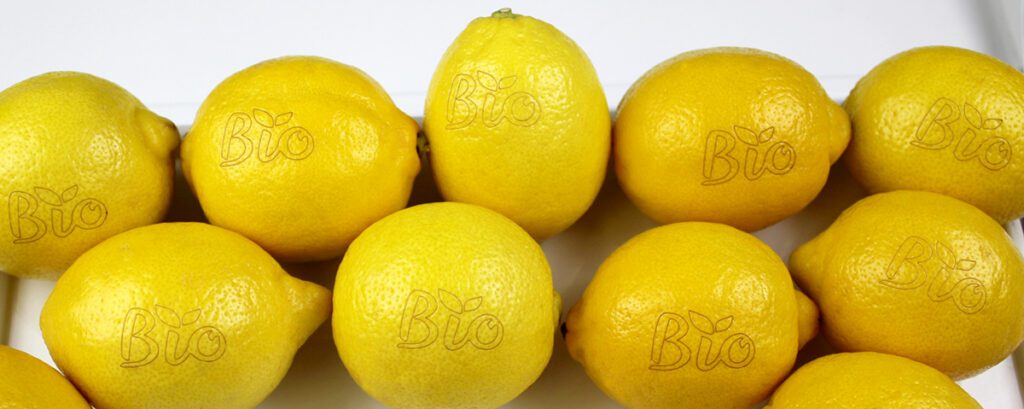
Are you looking to delve deeper into the numerous benefits and applications of laser marking technology when it comes to fruit, including its potential impact on quality control, traceability, branding, and environmental sustainability?
We will be delighted to find the best solution for your needs.